.png)
Your Story Is the Data We Can't Afford to Ignore
Updated: Aug 14

We have plenty of statistics.
We know that 81% of nurses have experienced workplace violence. We know that one incident can cost a healthcare organization $32,000 in direct medical expenses, and that legal settlements average between $800,000 and $1.2 million. We know the turnover numbers. We know the wait time data. We know what the research says.
What we do not have enough of are the stories behind those numbers.
The nurse who held it together after a patient threw something at her — and then went home and cried for the first time in years. The security officer who talked a man down from a ledge of rage before anyone else knew what was happening. The charge nurse who noticed something in a colleague's eyes and said the right thing at the right moment. The ED tech who was injured, recovered, and came back — and no one ever asked him what that was like.
Those stories are out there. Thousands of them. And they matter — not just as testimony, but as tools of change.
That is why we launched OPTICS Frontline Healthcare Stories.
Why Stories Matter — and Why We're Hardwired for Them
There is solid science behind what storytelling does to the human brain.
When we hear a compelling story, the brain produces oxytocin — a hormone associated with trust and connection. The listener feels more bonded to the person sharing the story. At the same time, certain kinds of stories trigger a release of dopamine, which improves memory retention and makes the details of what was shared easier to recall with accuracy.
That is not a metaphor. That is neuroscience.
Researchers Dan and Chip Heath found that after a presentation, only about 5% of people could recall specific statistics from what they heard. But 63% could remember the story the presenter told. Jennifer Aaker, a professor at Stanford's Graduate School of Business, has found that stories are 22 times more memorable than facts and figures alone.
For healthcare leaders, safety professionals, and advocates trying to shift culture — those numbers should stop you cold.
Data tells people what is happening. Stories make them feel it. And people who feel something are far more likely to do something.
Stories shape how others see a problem. They are tools of power — they let people absorb insights they might otherwise filter out. And they persuade. Not through argument, but through recognition. A person who hears a story and thinks "that could be me" or "I know someone just like that" is already moving toward belief. And belief is where action begins.
Two Kinds of Stories. Both Are Needed.
OPTICS Frontline Healthcare Stories collects two kinds of accounts — and we want both.
Stories Behind the Statistics. These are the accounts that put a human face on the data. They are harder to read than a report. They stay with you longer. A statistic tells you that 76% of healthcare staff think about their personal safety every single day. A story tells you what that feels like at 2 a.m. when a unit is short-staffed and something feels wrong. Both are true. Only one of them changes minds.
Prevention and Success Stories. Every day, healthcare workers do something that works. A CNA who reads the room and adjusts her approach. A charge nurse who calls a quick huddle before things escalate. A security officer who de-escalates a confrontation in the lobby before it becomes a headline. A team that built something — a protocol, a communication practice, a culture of looking out for each other — and it held.
These stories almost never get told. They do not make the news. They do not show up in incident reports. But they are the evidence that prevention is possible. That the outcome is not always the same. That people are doing this right, every day, all over the country.
We need those stories just as much as we need the hard ones. Because culture does not change through pain alone. It changes when people see what is possible.
This Is Your Invitation.
If you are a nurse, a physician, a technician, a security officer, a behavioral health worker, a front desk employee, a social worker, a transporter — anyone who works or has worked on the frontlines of healthcare — we want to hear from you.
You choose what to share. You choose how much detail to include. Submissions can be confidential. You can choose to remain anonymous or be recognized. There is no minimum length. There is no wrong way to tell your story.
If you have experienced workplace violence — whether once or many times — your account belongs in this record. If you have done something that worked, something that made your unit safer, your team stronger, your patients better protected — that story belongs here too.
And if you know someone on the frontlines who has a story worth sharing, send them the link. Tell them their story matters. Because it does.
Stories Don't Just Bear Witness. They Build the Case for Change.
OPTICS was built on the belief that workplace violence prevention requires more than compliance. It requires culture. And culture does not shift through policy memos and training calendars. It shifts when the right stories reach the right people at the right moment.
Stories told by real people — not spokespeople, not researchers, not executives — are the most compelling kind. A UK-based study found that 66% of people want stories from ordinary people, people they can recognize themselves in. That is because we are built for this. Personal stories make up nearly 65% of all human conversation. We are already in this habit. We just need to point it in the right direction.
The stories collected through OPTICS Frontline Healthcare Stories will be used to educate, to advocate, to humanize a problem that is too often discussed in the abstract. They will appear on our platform, shared with permission, in ways that protect the people who share them while amplifying the message they carry.
One story, shared at the right moment, can change how a hospital board thinks about this issue. One prevention story, shared with a unit manager who has never seen it done differently, can shift a protocol. One account of what it actually feels like to be on the receiving end of violence — told plainly, in someone's own words — can move a resistant leader from skepticism to urgency.
That is not optimism. That is how change actually works.
Share Your Story.
Visit https://www.opticshc.com/stories to submit your account — confidentially, on your terms, at no cost.
If you know someone on the frontlines, send them the link. Tell them their story matters.

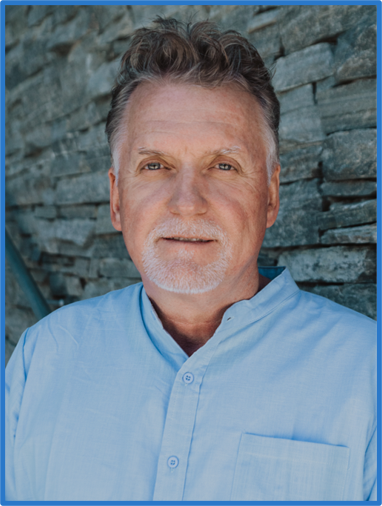
About David Kendric Brake
David Kendric Brake is CEO of OPTICS for Healthcare, an AI-native workplace violence prevention platform serving hospitals, physician practice groups, assisted living facilities, and skilled nursing organizations across the United States.
After 16 years in the book publishing industry, David became an entrepreneur with a consistent focus: building technology that helps organizations engage their target audiences, gather meaningful insights, and convert that information into actionable intelligence. That through-line runs directly into OPTICS — a platform designed not simply to produce compliance documents, but to assess organizational risk, surface gaps, generate facility-specific action plans, and give healthcare leaders and frontline staff the intelligence they need to prevent violence before it happens.
info@opticshc.com | 800-704-1269 | opticshc.com/stories


Comments