.png)
Workplace Violence in Healthcare: 22 Days, 22 Facts
Updated: Aug 14
One Action Could Change Everything

April is Workplace Violence Prevention Awareness Month.
Most organizations will mark it with a social post or two. Maybe a training reminder. Maybe nothing at all.
We are not doing that.
This month, OPTICS for Healthcare is committing to something specific: every business day in April — all 22 of them — we will post one key fact about workplace violence in healthcare and one simple, concrete action anyone can take that day. Not eventually. That day.
This is Day 1.
Why Healthcare? Why Now?
Workplace violence is an American problem. It shows up in schools, in retail stores, in government offices, and on public transit. It costs businesses billions of dollars every year. It ends careers. It takes lives.
But it concentrates — with a severity that is difficult to overstate — in healthcare.
The numbers are not abstractions. A new report from Canopy and HSI, released just weeks ago, found that 76% of healthcare staff now think about their personal safety every single day. Not occasionally. Not in high-risk moments. Every single day.
Eighty-one percent of nurses have experienced workplace violence — not as a rare or traumatic exception, but as a recurring feature of their professional lives.
The annual cost of workplace violence to the U.S. healthcare system is $30 billion. That figure spans hospitals, assisted living, skilled nursing, and physician practice groups. It does not capture the full human cost — the careers cut short, the clinicians who leave the profession they trained for, the invisible toll carried by people who show up anyway.
And it is getting worse. Violence rates against healthcare workers surged during the COVID-19 pandemic. They have not come back down. More than 30 states now have healthcare workplace violence laws on the books. Utah's governor signed new mandatory reporting legislation just two weeks ago. The legislative response is accelerating because the problem is accelerating.
The People Behind the Statistics
One violent incident increases the probability of a staff member leaving within 12 months by 40%. It adds an average of 19 minutes to patient wait times. The direct medical cost of a single incident averages $32,000. Legal settlements in these cases average between $800,000 and $1.2 million.
These numbers are rarely considered together. They should be.
The nurses, the physicians, the security officers, the behavioral health workers, the front desk staff — these are not statistics. They are the infrastructure of a system that every one of us will need at some point in our lives. When they leave, or when they stay but carry something invisible and unaddressed, the system does not hold.
That is the crisis. It is not coming. It is here.
Who We Are and Why This Month Matters to Us
OPTICS for Healthcare exists because awareness alone is not enough.
We are an AI-native workplace violence prevention platform built around four pillars: Assessment, Analysis, Action, and Assurance. We serve the full healthcare ecosystem — hospitals, physician practice groups, assisted living facilities, and skilled nursing facilities. Our platform is designed to help organizations move from policy to practice. From compliance to culture. From responding to violence after it happens to preventing it before it does.
We have spent more than two years listening to healthcare leaders, frontline staff, safety professionals, and the researchers who study this problem. What we have heard consistently is that the organizations doing this well are not just reacting faster. They are seeing patterns earlier, acting on what the data actually says, and building accountability structures that hold.
That is what we are building. April is our chance to be useful in public.
What We Are Doing This Month
Every business day in April, we will publish one fact and one specific action on the OPTICS for Healthcare LinkedIn page.
We want to be direct: we do not expect you to take action every single day. That is not a realistic request. Most people reading this have more competing for their attention than one more call to action.
But here is what we hope is achievable. If you follow along — if the facts accumulate, if one of them lands differently than the others, if something you read on a Tuesday morning stays with you through the week — you may find yourself doing that one thing. Saying something to a colleague. Sharing a post. Reaching out to someone who has been through something hard. Asking a question you had not thought to ask before.
One action, taken by enough people, shifts culture. That is not optimism. That is how change actually works.
We Also Want to Hear Your Stories
OPTICS Frontline Healthcare Stories is our initiative to gather firsthand accounts from nurses, physicians, technicians, security professionals, and others on the frontlines of healthcare. We are collecting two kinds of stories: accounts that bring humanity to the data, and accounts of success and prevention — something someone did that actually worked. Both matter.
If you have a story to share, or if you know someone who does, visit: opticshc.com/stories
Day 1 — April 1, 2026
TODAY'S FACT
76% of healthcare staff now report thinking about their personal safety every single day. That is not a workforce under stress. That is a workforce under siege — and it is the workforce responsible for the health and safety of every one of us.
— Canopy/HSI, March 2026
TODAY'S ACTION
If you work in healthcare: share this article with one colleague today — not to alarm them, but to let them know you see what they carry. A simple "I thought of you when I read this" goes a long way.
If you do not work in healthcare: share this with one person you know who does. Let them know you see what they are dealing with. That kind of acknowledgment means more than most people realize.
Follow the OPTICS for Healthcare LinkedIn page to receive each day's fact and action throughout April.
If your organization is ready to learn more, we would like to talk.

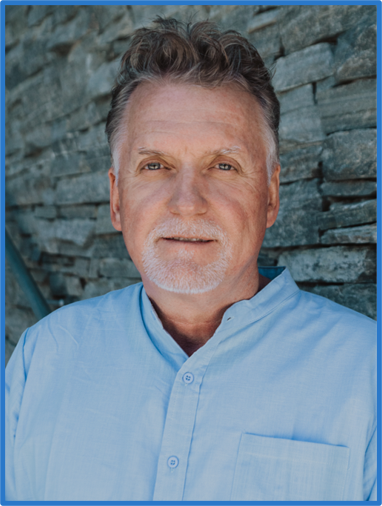
About David Kendric Brake
David Kendric Brake is CEO of OPTICS for Healthcare, an AI-native workplace violence prevention platform serving hospitals, physician practice groups, assisted living facilities, and skilled nursing organizations across the United States.
After 16 years in the book publishing industry, David became an entrepreneur with a consistent focus: building technology that helps organizations engage their target audiences, gather meaningful insights, and convert that information into actionable intelligence. That through-line runs directly into OPTICS — a platform designed not simply to produce compliance documents, but to assess organizational risk, surface gaps, generate facility-specific action plans, and give healthcare leaders and frontline staff the intelligence they need to prevent violence before it happens.
info@opticshc.com | 800-704-1269 | opticshc.com


Comments