.png)
Workplace Violence in Healthcare: Measure It. Manage It. Think Like a Safety Scientist.
Updated: Aug 14
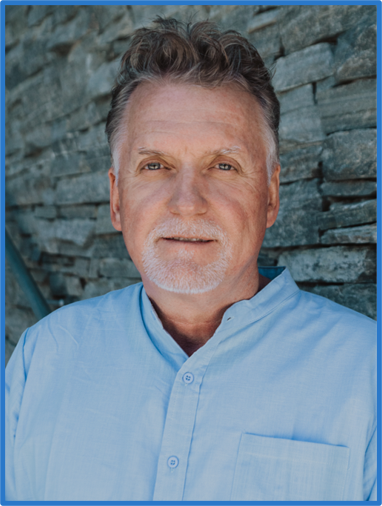
A conversation with Lori Severson, Risk Management Consultant, Lockton Companies — and Member, OPTICS for Healthcare Advisory Board

Most conversations about workplace violence in healthcare start with a number.
Thirty billion dollars. Eighty-one percent. Forty percent higher turnover risk after a single incident. These figures are real, and they matter. But if you lead a healthcare organization — a hospital, a skilled nursing facility, a physician practice group — and you are waiting for the data to compel your team to act, Lori Severson has something important to tell you.
The data alone will not get you there.
Lori Severson is a risk management consultant with Lockton Companies, one of the largest privately held insurance brokerage firms in the world. She has spent decades working with healthcare organizations on workplace safety, loss prevention, and the intersection of insurance risk and institutional culture. She serves on the OPTICS for Healthcare Advisory Board and brings a perspective that is equal parts practical and unsparing.
We sat down with Lori for a series of conversations about what healthcare leaders need to understand about workplace violence — how to measure it, how to manage it, and how to think about it the way a safety scientist would. What follows are excerpts from three of those segments.
Data Quality — Garbage In, Garbage Out
If you are collecting workplace violence data, the first question Lori asks is not how much you have. It is how good it is.
"Data always has the challenge of the quality of the questions asked. We call it garbage in, garbage out. The concern with data will be in unclear expectations of what they're asking. The tracking should have some sort of training applied so you understand what you're supposed to collect." — Lori Severson
This is a more fundamental problem than it sounds. Incident tracking systems vary widely across healthcare organizations. Who keeps the data, what they have been trained to capture, and how consistently they apply definitions — all of it shapes the picture that emerges. Without clear, standardized questions and trained staff to answer them, the data reflects the system more than the reality.
Lori is not opposed to more data. She is in favor of better data. Cleaner data that can inform five-year analytics, support actionable safety planning, and give state-level health systems a clearer view of the scope of the problem. But she draws a sharp line between data as a tool and data as a destination.
"I'm not always convinced in the science of safety that numbers compel people to change or do anything. Data is a wonderful part of the story — half of my story. But the more granular, actionable pieces come from the emotional context in which these events happen and the institution's understanding of them — or their lack of understanding. Then and only then can I get to an actionable safety step that someone can do something about." — Lori Severson
That framing deserves to land. Data is half the story. The other half is context — the culture of a unit, the way leadership responds when something happens, whether staff believe reporting is safe, whether anyone ever follows up. Strip out that context and you are left with a number that describes a problem without illuminating it.
For healthcare organizations building or refining their workplace violence prevention programs, the implication is clear: invest as seriously in the quality of your data infrastructure as you do in the volume of data you collect.
What Gets Measured Gets Managed — and What Doesn't, Doesn't
The $30 billion figure attached to workplace violence in U.S. healthcare gets cited often. Lori believes it is an undercount — and she has a specific reason why.
"I do not see workplace violence as the number one cause of loss. Rather, it is severely underreported — and it goes back to the definition of workplace violence incidents. I have organizations talk to me about their workplace violence and they'll argue with me over how to code and categorize and define this type of incident." — Lori Severson
The definitional problem is both practical and cultural. Most healthcare leaders will agree that being punched, kicked, bitten, or headbutted by a patient who is alert and oriented constitutes workplace violence. The agreement breaks down quickly once medication or procedures enter the picture.
"Once we apply any type of medication, procedure, or surgical process, and those same things happen, they don't want to call that a workplace violence incident. They'd rather categorize it as the cost of doing business." — Lori Severson
That phrase — the cost of doing business — is one of the most consequential phrases in healthcare safety. When violence is coded as an expected occupational hazard rather than a preventable incident, it disappears from the data. It cannot be measured. And what cannot be measured cannot be managed.
The indirect costs compound the problem. The $30 billion figure captures many direct costs — medical expenses, legal settlements, immediate productivity losses. It is far less reliable on indirect costs: the staff member who leaves the profession entirely, the restaffing and retraining expense, the productivity gap during the transition, the erosion of team cohesion on a unit that has absorbed repeated incidents without institutional response.
The good news — and Lori is direct about this — is that prevention is possible. The framework she uses comes from the hierarchy of controls, a foundational concept in occupational safety science.
Elimination first. Can the risk be removed entirely? If not —
Engineering controls. What environmental or physical changes reduce exposure to the risk?
Substitution. Are there alternative approaches, workflows, or staffing configurations that reduce risk?
Administrative controls. Policies, protocols, training, and reporting systems that govern how risk is managed.
The challenge, Lori notes, is that most healthcare organizations — particularly outside of acute care — do not have safety-engineering-trained professionals on staff. HR generalists often fill the gap. They are not always equipped for the same work, and the gap shows.
"I rarely work with another safety professional. So often we work with HR generalists. That's another benefit of having broker resources staffed to these entities — because we simply do not have the professional staff with safety engineering training within healthcare institutions, especially when you get outside of acute care." — Lori Severson
The Science of Safety — Risk Assessment as a Discipline
If the first two segments are about understanding the problem, this one is about building the systems to address it. Lori calls this the science of safety — a disciplined, methodical approach to risk assessment that starts with a simple premise: the people in the building already know where the risk is.
"There's a level of risk in every community and every unit. And if you've worked there a while, you know what the risk is. This is where science of safety comes in. What's the probability of this event? And if I have this event, how severe is it going to be?" — Lori Severson
Probability and severity. Those two variables are the foundation of any risk assessment framework. Frontline staff can usually estimate both with reasonable accuracy — but that knowledge rarely gets captured in a formal, actionable way. The science of safety provides the tools and vocabulary to do that: to put a name, a level, and a number around what people already sense, and translate it into a prevention plan.
From there, the hierarchy of decision-making applies — eliminating the risk where possible, engineering it down where it is not, and managing it administratively where it persists. Lori's goal is to make this process as instinctive as bloodborne pathogen protocols.
"Getting to that level of where safety is institutionally something they just do — so that they can work safely — is what you have to do in workplace violence. But it's not as easy because it isn't just PPE. There are so many cultural things and so many layers to it." — Lori Severson
Those layers include patients who are intoxicated or in psychiatric crisis, visitors and family members who arrive already escalated, peer-to-peer conflict, and the accumulated stress of a workforce that has been under sustained pressure for years. No single protocol addresses all of it. That is precisely why workplace violence prevention requires a systems approach — not a checklist.
Lori points to one area of genuine optimism: healthcare already knows how to do continuous quality improvement. The infrastructure exists. The culture of iterative review, outcome measurement, and process refinement is built into how the best healthcare organizations operate.
"Mirroring the science of safety alongside quality — we need to balance patient and worker safety. And we do that through the science of safety and risk assessing. That continuous quality improvement process is inherent in healthcare. They know how to do that so well." — Lori Severson
The ask, then, is to treat worker safety with the same rigor and institutional commitment that healthcare already brings to patient safety.
What This Means for Your Organization
Three segments. Three frameworks. One through line.
Workplace violence in healthcare is measurable — but only if you define it clearly, train people to track it consistently, and resist the temptation to categorize preventable harm as an occupational inevitability.
It is manageable — but only if you apply the right controls in the right order, staff the right expertise, and treat indirect costs with the same seriousness as direct ones.
And it is addressable through safety science — not as a special initiative, but as an extension of the quality improvement infrastructure healthcare organizations already have.
Lori Severson has spent her career at the intersection of risk, insurance, and institutional culture. Her message is not pessimistic. It is precise. The problem is larger than most organizations think.
How OPTICS for Healthcare can Make a Difference
OPTICS for Healthcare was built to close that gap — with the data infrastructure, the analytical framework, and the institutional support that healthcare organizations need to move from awareness to action. We invite you to learn more about how OPTICS can make a difference in your organization.

About David Kendric Brake
David Kendric Brake is CEO of OPTICS for Healthcare, an AI-native workplace violence prevention platform serving hospitals, physician practice groups, assisted living facilities, and skilled nursing organizations across the United States.
After 16 years in the book publishing industry, David became an entrepreneur with a consistent focus: building technology that helps organizations engage their target audiences, gather meaningful insights, and convert that information into actionable intelligence. That through-line runs directly into OPTICS — a platform designed not simply to produce compliance documents, but to assess organizational risk, surface gaps, generate facility-specific action plans, and give healthcare leaders and frontline staff the intelligence they need to prevent violence before it happens.
info@opticshc.com | 800-704-1269 | opticshc.com


Comments