.png)
The Storm Is Already Here. We'd Like to Know If You Agree.
Updated: Aug 14
OPTICS for Healthcare invites peer review of a new white paper on workplace violence — written by someone from outside the industry, on purpose.

Most of what gets written about workplace violence in healthcare falls into one of three categories.
There are the people who live it — the nurses, physicians, security officers, and frontline staff who absorb the daily reality of a system under strain. They know the problem from the inside. What they rarely have is the time, the platform, or the institutional support to write about it.
There are the journalists — most of them skilled, some of them specialized in healthcare — who tend toward the dramatic and the immediate. The incident. The lawsuit. The strike.
And then there are the experts: safety consultants, security professionals, clinical specialists, and seasoned practitioners who have spent years with their boots on the ground inside healthcare organizations. Their perspective is grounded, practical, and hard-earned. They know what works and what does not. Their voice matters enormously in this conversation.
But here is a different question. What happens when you hand this problem to an award-winning sociology professor — someone trained not to react to incidents and drama, but to look for the structures that produce them? How does a sociologist approach workplace violence? What does he see that the insider, the journalist, and the consultant might not? And does he add something important to a conversation that, for all its urgency, still has not produced the change it demands?
That is the question behind the white paper we are about to publish.
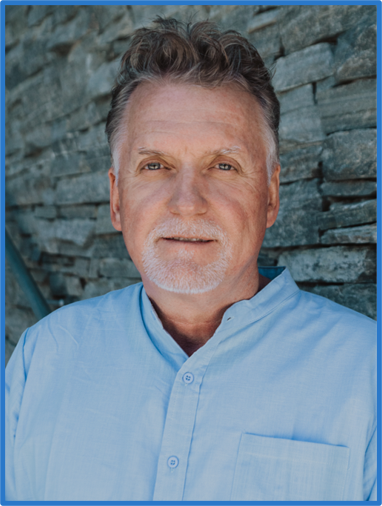
We reached out to Charles S. Levy, a professor and academic author with more than thirty years of experience in organizational sociology — the discipline that studies how institutions are structured, how they function under pressure, and how they unintentionally produce patterns of behavior that no one explicitly set out to create. He is not a clinician. He has no administrative stake in how this problem is understood. He came to it from the outside, with a sociologist's eye for structure, pattern, and the forces that shape human behavior in organizations.
What he produced is a white paper titled The Storm Is Already Here: A Sociologist's View of Workplace Violence in Healthcare.
It is rigorous and readable–in my opinion. But before we publish it, I want to know what you think.
What the Paper Covers
The Storm Is Already Here examines workplace violence in healthcare not as a series of individual incidents, but as a structural phenomenon — one rooted in how healthcare organizations are designed, how work is distributed, and how the emotional demands placed on frontline workers interact with the institutional conditions around them.
Levy draws on foundational sociological frameworks — including W. Richard Scott's three-pillar theory of institutional behavior and Arlie Hochschild's concept of emotional labor — to explain why the same patterns of escalation keep appearing across different hospitals, different units, and different patient populations. His core argument: what looks unpredictable in the moment is, in fact, deeply structured. And what is structured can be changed.
The paper addresses the financial costs of workplace violence, the uneven distribution of risk across roles, the four forces making the environment more volatile, and the critical distinction between compliance-driven responses and the cultural and cognitive shifts that produce lasting change. It closes with a clear-eyed look at what healthcare organizations, frontline staff, and patients can each do — and what the work ahead actually requires.
"The storm named in this paper's title is not approaching. It is already inside the building. What remains to be decided is how healthcare organizations choose to respond to it — as the structural phenomenon it is, or as a series of individual incidents that no one could have predicted." — Charles S. Levy, The Storm Is Already Here
Why We Asked an Outsider
This was a deliberate choice.
OPTICS for Healthcare was built on the belief that preventing workplace violence requires more than better training and faster incident response. It requires understanding the conditions that produce violence in the first place — the organizational design, the cultural expectations, the power dynamics, the emotional rules attached to caregiving work. That kind of systemic analysis is exactly what sociology is built to provide.
Levy does not come to this paper with a product to sell or an institutional reputation to protect. He comes with a discipline that has spent decades explaining why the same problems keep appearing in organizations that are, by every visible measure, trying to do things right. His outsider perspective is not a limitation. It is the point.
But an outsider's perspective has limits too. That is why we are not publishing this paper without first inviting the people who know this environment best to weigh in.
Here Is Our Invitation to You
We are asking healthcare professionals — clinicians, safety officers, administrators, researchers, risk managers, and anyone else who works in or alongside the healthcare system — to read this white paper and share their response.
A few specific questions we hope you will consider:
Does Levy accurately describe the conditions you see in your organization or field?
Are his sociological frameworks — Scott's three pillars, Hochschild's emotional labor — useful lenses for understanding this problem in a healthcare context?
Where does he get it right? Where does he miss something that only someone inside the system would know?
Are his conclusions supported by what the research and your experience actually show?
This is not a survey. It is an invitation to engage with a substantive piece of work and tell us — honestly — what you think of it. Your insights will inform how the paper is refined before publication and how OPTICS frames the work we are building.
A Small Token of Appreciation
We recognize that your time and professional judgment have real value. Everyone who completes a review will receive a $25 Amazon gift card as a thank-you from OPTICS for Healthcare. It is not payment — your insights are worth far more than that. It is simply our way of acknowledging that you took the time to engage seriously with something that matters.
How to Read the Paper and Share Your Review
The white paper is available now. The review form takes approximately 10 to 15 minutes to complete. We welcome responses from anyone with professional experience in or adjacent to the healthcare field.
Access the white paper and complete your review here: https://www.research.net/r/Socofwpvinhealthcare
The review period will remain open through June. We will share a summary of what we heard — including the most substantive feedback — when the paper is published.
Why This Matters
Workplace violence in healthcare is not going to be solved by any single paper, platform, or program. It will be solved — to the extent that it can be — by organizations that are willing to look at the problem clearly, speak honestly about what they see, and build responses that match the actual scale and structure of the challenge.
Charles Levy looked at this problem from the outside and saw something worth saying. We think he is largely right. But we want to know if you agree — and where you think the view from the inside looks different.
Your perspective belongs in this conversation. We hope you will share it.
We have set our online review system to accommodate 25 reviews. If you are not among the first 25 to engage in this review, the system will not allow you to enter. Sorry for the inconvenience if you are not among the first 25. However, we will be happy to give you access to the published white paper, upon publication.

About David Kendric Brake
David Kendric Brake is CEO of OPTICS for Healthcare, an AI-native workplace violence prevention platform serving hospitals, physician practice groups, assisted living facilities, and skilled nursing organizations across the United States.
After 16 years in the book publishing industry, David became an entrepreneur with a consistent focus: building technology that helps organizations engage their target audiences, gather meaningful insights, and convert that information into actionable intelligence. That through-line runs directly into OPTICS — a platform designed not simply to produce compliance documents, but to assess organizational risk, surface gaps, generate facility-specific action plans, and give healthcare leaders and frontline staff the intelligence they need to prevent violence before it happens.
info@opticshc.com | 800-704-1269 | opticshc.com


Comments